
Puerto Rico’s
Energy Information Ecosystem
Connect Puerto Rico (CPR) is an English-language journalism and information project focused on Puerto Rico’s electric grid, renewable energy development, infrastructure, policy, funding and workforce.
CPR examined how people find, trust and use information about Puerto Rico’s electric grid, renewable energy development, public funding and energy decisions, and what would make that information easier to find and use.
Why this matters
Puerto Rico’s energy crisis is local in consequence, but not local in power.
When electricity fails, people can lose refrigeration for medicine, access to medical devices, communications, safe indoor temperatures, and water. At the same time, the decisions shaping the grid and renewable energy transition are spread across utilities, regulators, federal agencies, contractors, courts and oversight bodies.
The information needed to follow those decisions exists, but it is often scattered, technical, outdated or difficult to verify. That makes it harder for residents, journalists, policymakers, funders and energy professionals to understand what is changing, who has authority and who is accountable.
About the assessment
This assessment draws on a 304-response audience survey conducted through Medill’s Local News Accelerator, smaller energy-listening surveys and input from people working across energy, journalism, climate, accountability and public information. The survey was designed to understand CPR’s target audiences and was not intended to represent Puerto Rico’s general population.
This assessment was developed with support from Listening Post Collective using tools and resources from its Civic Media Playbook.
What we found
Puerto Rico’s energy transition does not have an information shortage. It has an information usability problem.
People are piecing together updates across news reports, social media, government websites, regulatory filings and professional networks. The challenge is determining what is current, trustworthy and relevant—and then translating it into information they can explain or use.
Among 44 professional respondents:
36% said there were too many sources and they did not know which to trust.
27% said information was out of date or incomplete.
Across 304 survey respondents, the strongest preferences pointed toward information that is easier to search, understand and share, including short videos, visual explainers and a searchable website or resource hub.
Electrical engineering professor Marcel Castro-Sitiriche described the problem as one of public access to reliable energy data.
“Energy data is often treated like sensitive data that should not be shared to protect critical infrastructure, but there is no real reason to keep private a lot of data about the status and operation of the electric system.”
— Marcel Castro-Sitiriche, professor of electrical engineering, University of Puerto Rico at Mayagüez, and board president, Barrio Eléctrico.
What this points toward
The assessment points to a stronger public information service built around how people actually look for and use information.
Connect Puerto Rico is exploring:
a searchable resource hub for explainers, source links, timelines and key decisions
policy briefings and expert Q&As
tracking tools for funding, projects, hearings and regulatory developments
visual explainers and short guides
a stronger network of trusted experts and sources
Developing and testing these resources will require funding, staff capacity and strategic partners.
Read the full assessment
The full 13-page assessment includes the methodology, survey findings, community leader perspectives and a closer look at the information tools and partnerships this work could support.
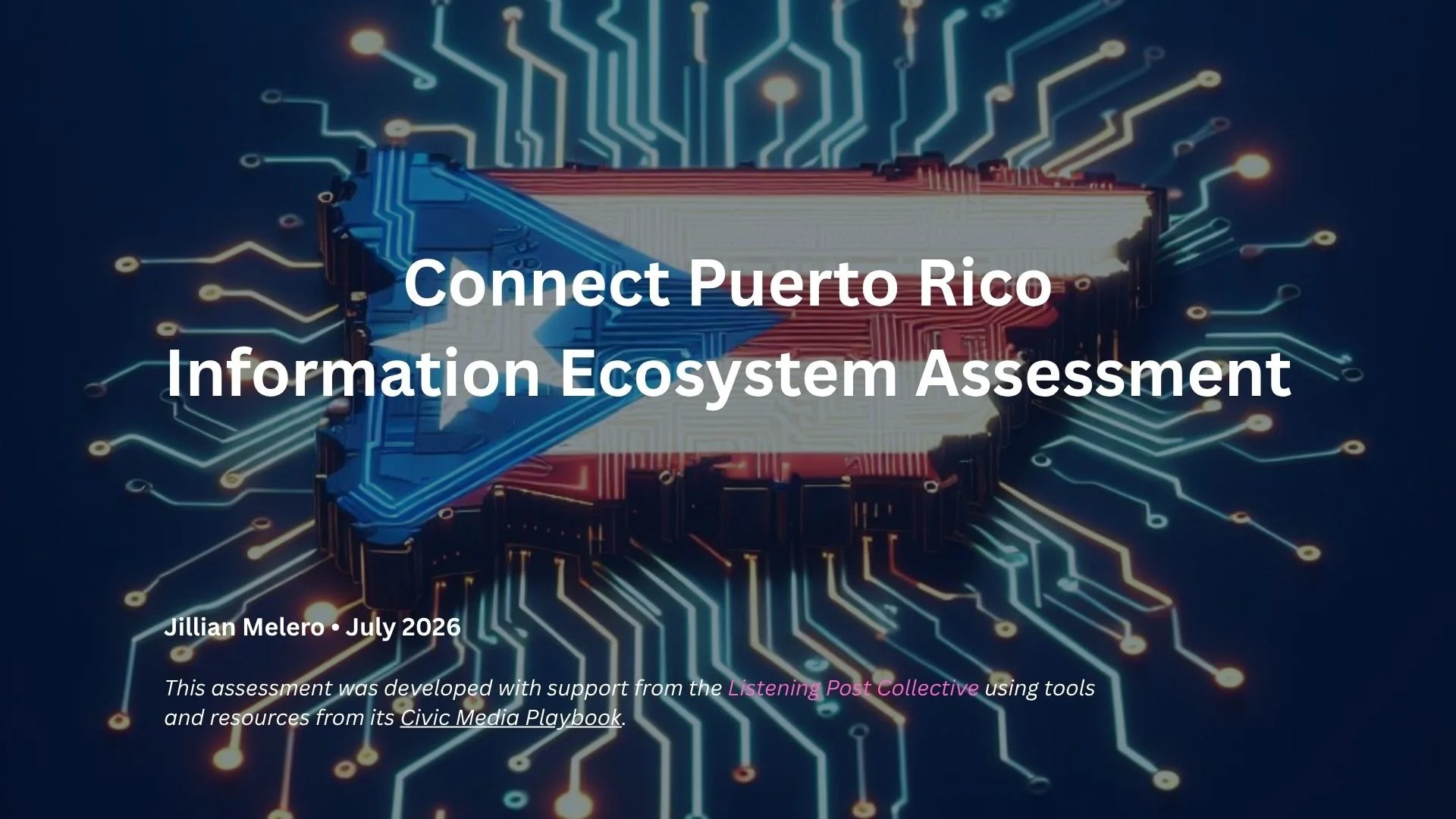
Connect Puerto Rico Information Ecosystem Assessment · July 2026 · 13-slide deck Please cite and link to this assessment when using its findings.
Help CPR build these public information tools
Connect Puerto Rico is seeking funding, expert partners, and distribution support to develop the resource hub, tracking tools, briefings, and visual explainers identified through this assessment.